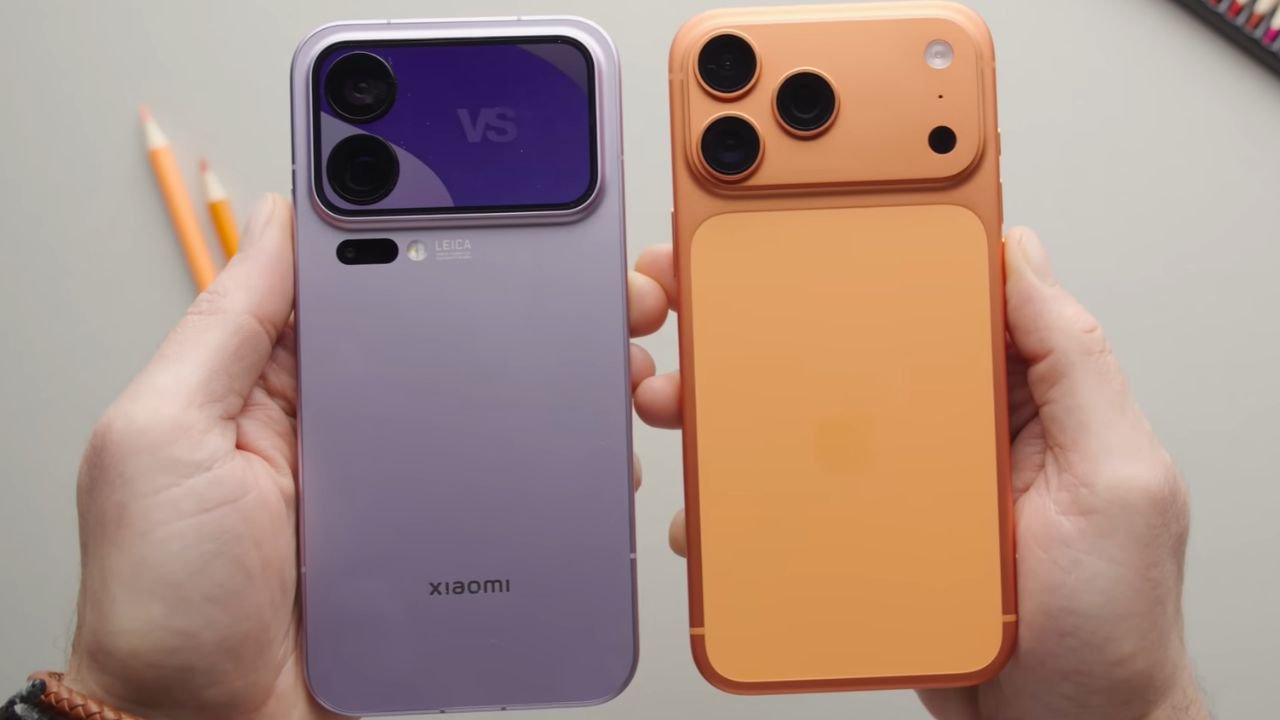
Everyone jokes about the Xiaomi 17 Pro Max copying the iPhone 17 Pro Max, but we are here to check the facts. This blog compares their design, screen, sound, cameras, speed, software, and battery to help you decide.
Design and Build
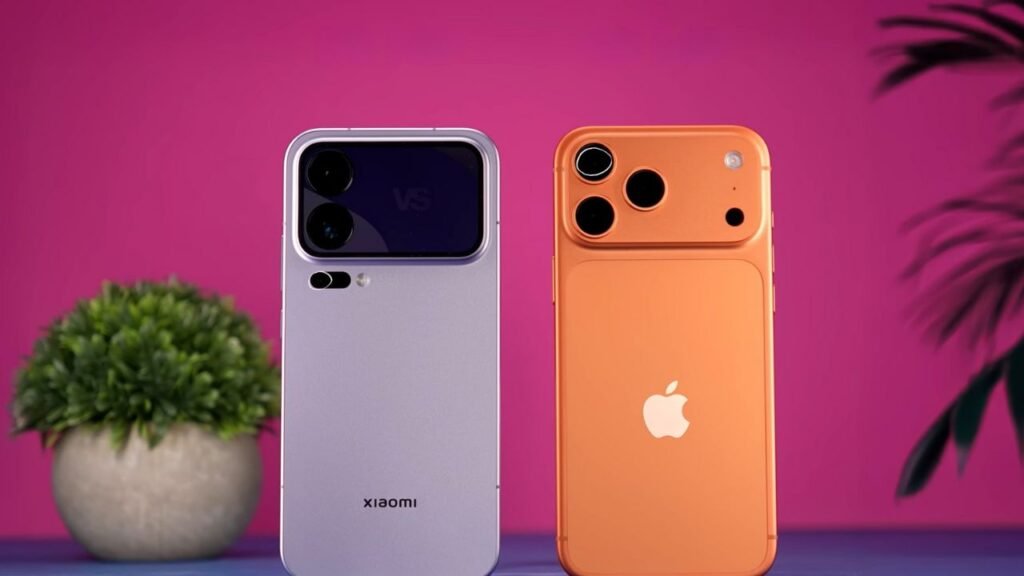
There is nothing debatable about the fact that Xiaomi has copied the design from the iPhone 17 Pro leaks. But let me tell you that aluminum frame and plastic back feel really cheap when compared to the iPhone 17 Pro Max.
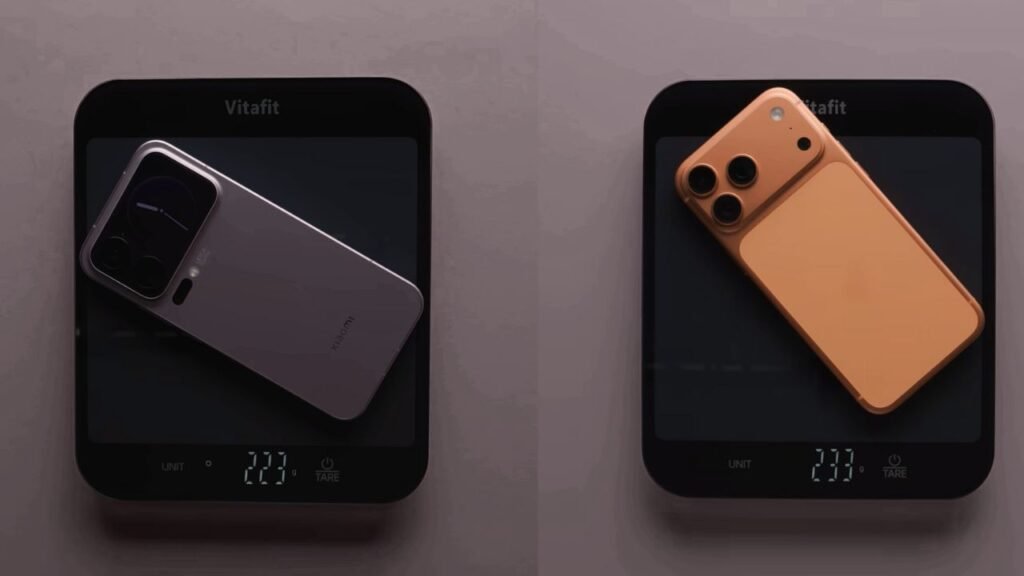
iPhone 17 Pro Max on the other hand is build with premium material like aluminum with strong back made up of ceramic metal. because of cheap plastic Xiaomi weighs 223 grams, lighter than the aluminium framed iPhone’s 233 grams.
iPhone is also having IP68 rating which means it can hold iPhone under water for about 6 meters deep for 30 minutes but Xiaomi on the other hand has not unveiled its IP rating, some say IP68 or IP69.
Screen Features
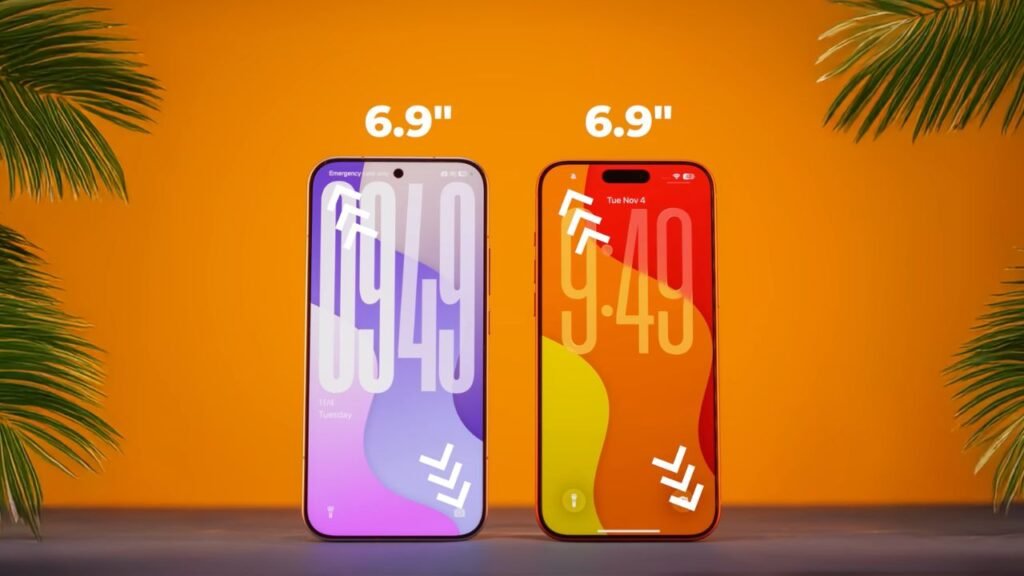
Both phones have 6.9-inch LTPO OLED screens that produces 120Hz refresh rate making them top choice for gaming. However, iphone is offering anti-glare coating which is an plus point if you find it useful.
Xiaomi shines with a 2.9-inch rear AMOLED screen at 120Hz for quick checks or selfies using main cameras.
In bright tests, both hit 1,200 nits normally, but Xiaomi peaked at 4,020 nits (better than claimed 3,500). Xiaomi uses under-screen fingerprint; iPhone uses Face ID. Xiaomi wins for brightness, HDR support, and useful rear screen.
Sound Quality
Both have stereo speakers that sound good. Xiaomi plays louder with sharp highs; iPhone has deeper bass but is quieter.
Camera Tests
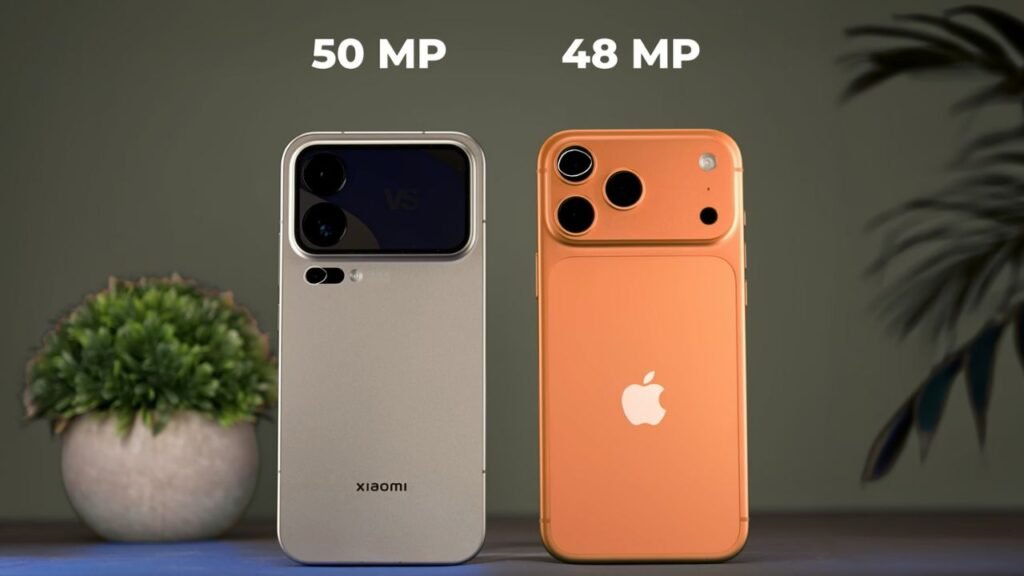
- Main cameras: Xiaomi 50MP, iPhone 48MP, same large sensor size. Xiaomi boosts contrast and colors; iPhone looks grainier up close. In the indoor shots Xiaomi cools down the tones but iPhone produces warm pictures with rich colors.
- Ultrawide: Both smartphones offer near 50 megapixel ultrawide camera but let me tell you that iPhone’s 120° view beats Xiaomi’s 102° camera all day. But Xiaomi has less noise; iPhone shows more scene.
- Zoom: Xiaomi 5x optical beats iPhone 4x, with AI detail up to 120x (but fake at high zoom). Low-light: Xiaomi strong on main and telephoto; iPhone better ultrawide. Overall, iPhone more natural; Xiaomi good for zoom and some low-light.
Front Camera and Audio
Now, right at the front, we’ve got a 50 megapixel camera on Xiaomi and an 18 megapixel cam on the iPhone, which comes with a square sensor for photos in either vertical or horizontal orientation without having to physically rotate the phone.
Here, both look similar, though you can still see Xiaomi slightly lifting some highlights in my face, while the iPhone looks more even. For fine detail, Xiaomi definitely takes the high ground. In low light, we see Xiaomi has better control over intense light sources, but unlike before, it’s lacking a little vibrancy.
The iPhone looks good here, but it has noticeably much more noise compared to Xiaomi. For video with these cameras, we have a maximum format of 4K 60fps on both devices. Xiaomi, despite having good highlight control in low light scenes, clearly has trouble managing the intense brightness in video mode.
The iPhone, on the other hand, offers much better dynamic range
Speed and Power Tests
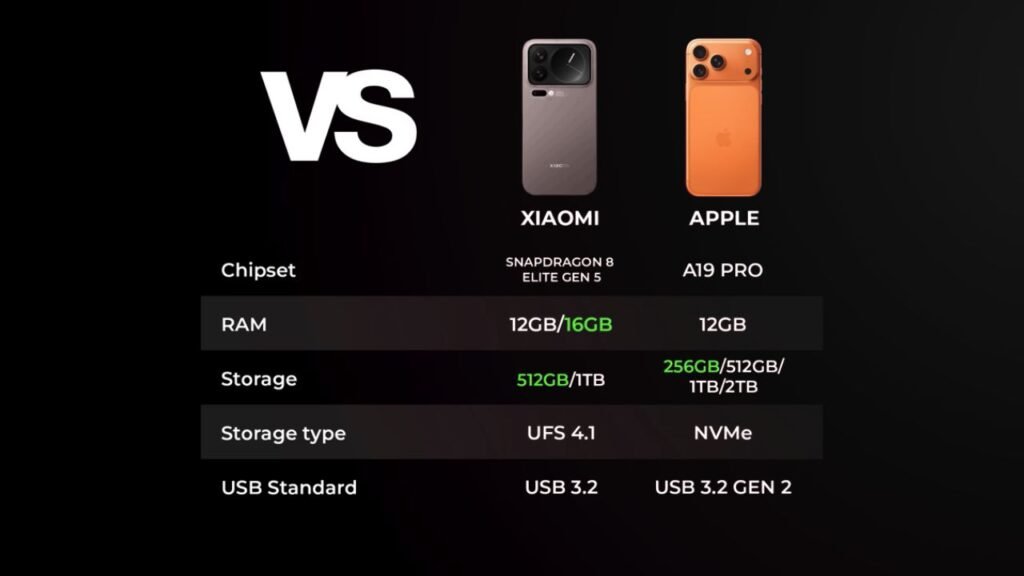
Our test Xiaomi had 16 GB of RAM and iPhone had 12 GB. Different storage and USB options exist, but not everywhere.
We tested real use. In gaming, we played 30-minute sessions with breaks. In Grid Legends, iPhone hit 40 frames per second (FPS). Xiaomi stayed at 30 FPS. iPhone stayed steady but got hot at 47°C. Xiaomi cooled at 40°C.
In Wuthering Waves at max graphics, Xiaomi won. FPS matched, but Xiaomi stayed under 40°C. For editing, Xiaomi exported 99 Lightroom photos 1 minute faster. It rendered a 3-minute 4K video in 19 seconds.
Benchmarks showed iPhone better in single-core Geekbench 6. Xiaomi topped multi-core over 10,000 points. In 3DMark stress test, Xiaomi led best scores over 6,000, but both tied low scores—Xiaomi slowed more under heat. AnTuTu scores differ by system.
Both chips are very strong. Xiaomi wins daily tasks and stays cooler. Gaming ties—iPhone games run smoother on iOS.
Software and Look
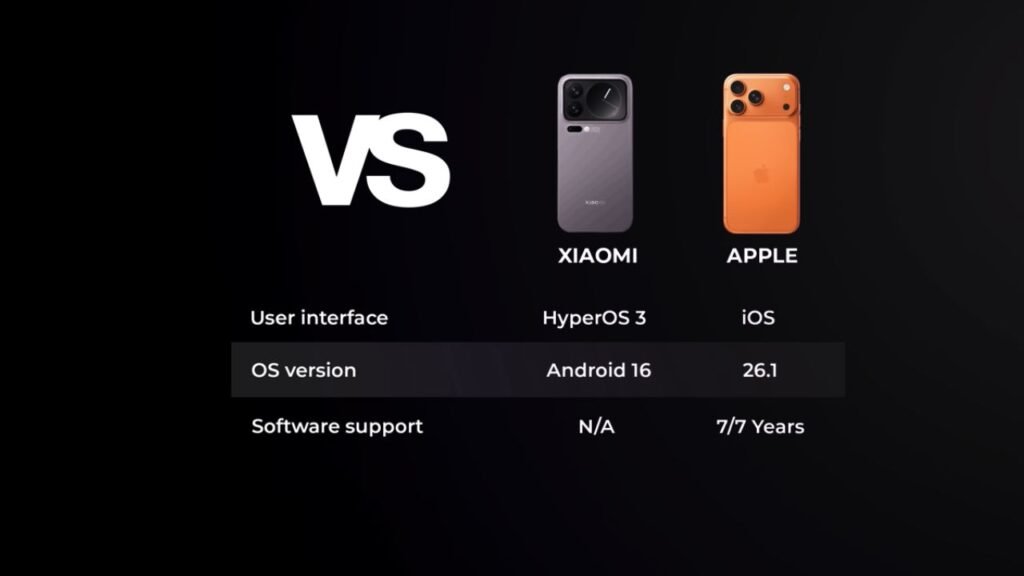
Xiaomi runs HyperOS 3 on Android 16. iPhone uses iOS 26.1. Xiaomi update years unclear for China version. iPhones get about 7 years of updates. HyperOS looks like iOS with glassy effects. It adds AI live wallpapers, icon choices, and themes. Hyper Island copies iPhone’s Dynamic Island (from Honor first). Gallery AI helps edit photos. China version lacks full Google apps like Android Auto.
iOS 26 has smooth glassy look, new icons, and camera tweaks. AI includes call screening, smart Siri with ChatGPT, and camera searches. Playground makes fun images. No easy back button everywhere. Creators get Pro Raw tools.
Battery Life and Charge
Xiaomi packs a huge 7,500 mAh battery. iPhone international model has 4,823 mAh. Xiaomi charges wired at 100W, wireless at 50W. iPhone wired speed unlisted, wireless slower. Both do reverse charging, but iPhone limits wireless reverse to plugged-in MagSafe packs.
In tests, Xiaomi filled 0-100% in 47 minutes at 76W peak. iPhone took 86 minutes at 37W. Xiaomi uses standard chargers too.
Final Pick and Price
Xiaomi sells only in China for $850. Importing costs $1,000 with fees. iPhone starts at $1,199—a $199 difference. Xiaomi matches iPhone in name and look with big wins in screen, battery, and speed. But cameras underwhelm in real shots, software copies iOS, and no global sales hurt.
iPhone suits most for ease and trust. Check our iPhone vs Google/Samsung links. Like, subscribe, and get that chore done! See you next time.




Be First to Comment