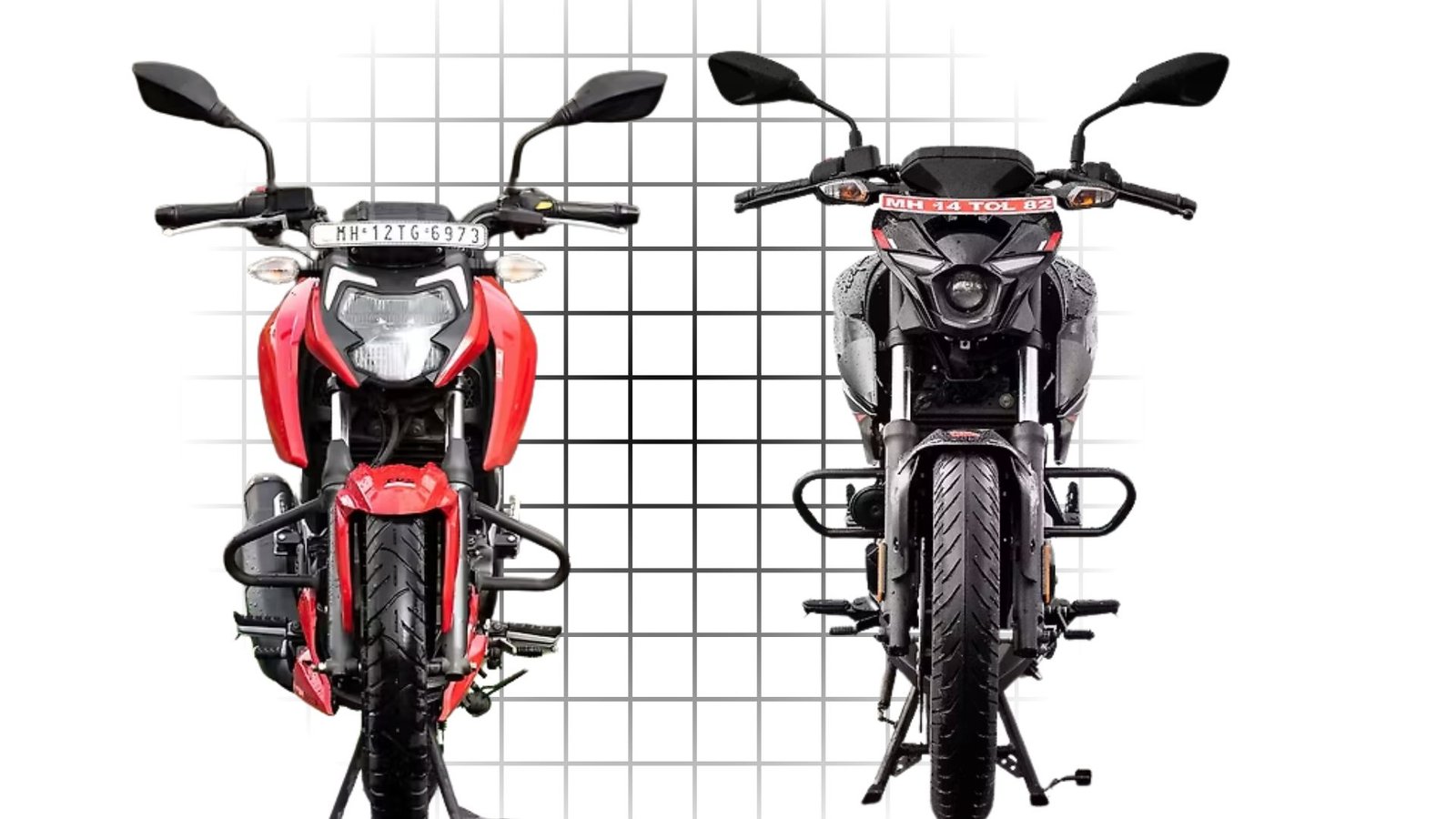
This is the latest comparison between tvs apache rtr 160 4v vs pulsar n160 of their latest models. These two 160cc beasts have been duking it out since day one, and now with prices kicking off just 2,000 apart for basics and closing even tighter at the top end, it’s a real toss-up. We’re zeroing in on the loaded Pulsar N160 and the just-refreshed Apache RTR 160 4V top trims here—think sporty rides that punch above their weight.
Whether your wallet’s feeling generous or you’re hunting value, this breakdown sorts out if the N160’s your pick or the Apache’s sharper edge wins you over. Stick around; we’ve got the full scoop from design quirks to real-world grunt.
Design & Look
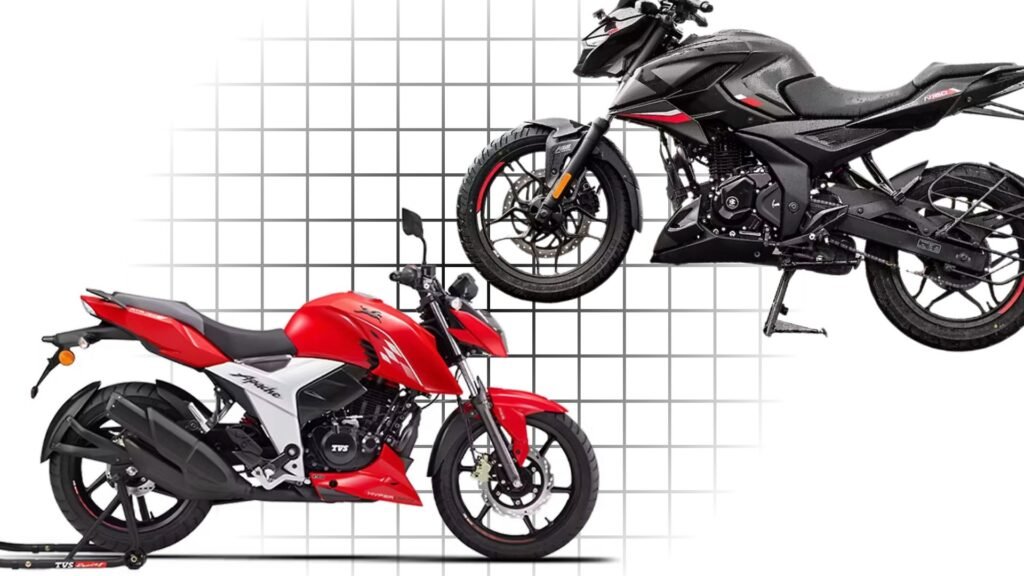
You can’t miss the array of shades both these bikes throw your way—plenty to match your style. Step back for the big picture: the Apache’s right side screams agility, much like the Pulsar’s left and right flanks, and even the Apache from the other angle. Front-on, they’re both pure aggression, no doubt. The Apache’s headlight setup feels sleeker these days, while the Pulsar packs a tad more bulk up top.
That aggressive vibe? It’s swept the 160cc crowd, thanks to the MT-15’s influence, then the N160 jumped on board. TVS mixed it up a bit on the Apache to stand out. Projector LEDs light the way on each, though the Apache tweaks the formula slightly—night beam tests come later. Blinkers glow LED across the board.
DRLs fire up when you twist the key, but passing lights need a nudge on throttle for both, except the Pulsar has a handy dedicated switch. USD forks handle the front: dark gold for Apache, lighter hue on Pulsar. Seventeen-inch alloys spin underneath, patterns unique to each. Tubeless rubber’s the game—CEATs on Pulsar with a beefier 100/80-17 front, MRFs on Apache at 90/90-17. Brakes? Dual-channel ABS seals the deal, Pulsar rocking a 300mm front petal disc, Apache at 270mm.
Fuel Tank & Build Quality
Peep the Apache’s tank: fiber-built, slapped with TVS and RTR badges, E20-ready, holding 12 liters steady. Flip to the Pulsar—its cowl and 3D emblem sit on a full metal body, which plenty of riders swear by for that tough feel.
Bonus on the N160: USB-A port right from the entry level for phone top-ups. E20 compatibility checks out for both, but Pulsar’s 14-liter tank means fewer fuel stops on those long hauls.
Grips, Switches, and Dash Smarts
Apache’s bars keep things straightforward—left grip handles indicators, beams, passing, modes, and horn; right side’s kill switch, headlight toggle, starter, and key. The meter? A full-color digital stunner straight from the RR 310, Bluetooth-linked for nav turns and every stat you could want. Throw in traction control, slipper clutch assist, and GT tech, and it’s loaded for the segment.
Pulsar’s setup echoes that with adjustable levers (three positions for clutch and brake—nice for fit tweaks). Same switches mostly: passing dedicated, beams, indicators, horn, kill, modes, headlight, starter.
No stock charger here (grab it as an add-on, especially in anniversary spec), but the wavy key adds a premium touch. Its meter sticks to black-and-white digital—solid, but not as flashy.
Engine & Performance
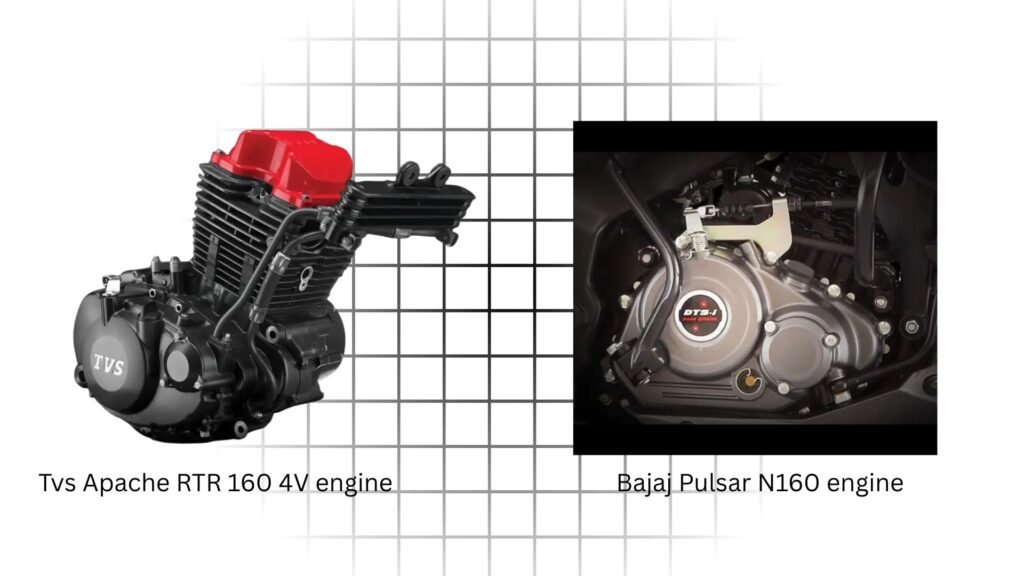
The engines are what really get me excited about these rides. I’ve always been impressed by the Apache’s 159.7cc oil-cooled single-cylinder mill; it’s BS6 PFI with four valves and a four-stroke heart, pushing 15.68 bhp at 8,750 RPM and 14.65 Nm at 6,750 RPM, which feels refined in city traffic. The Pulsar hits back with its 164.82cc air-cooled single, BS6 PFI two-valve four-stroke unit that squeezes out 16.2 bhp at 8,000 RPM and 14.8 Nm at 6,500 RPM—honestly, those numbers make it seem punchier on paper, and I’ve noticed it in quick accelerations.
Both shift through five gears without a hitch, which I appreciate for smooth cruising. Safety-wise, I rely on the side-stand cut-off and central stand, plus those folding rider pegs and pillion spots that make group rides easier.
The rear monoshocks are adjustable in multiple steps, letting me tweak for my weight and style. Chains are bare but saree-guarded—no lady pegs, which is a miss for family use in my opinion. The Apache’s single seat with that gravel cowl and TVS Racing stickers? It gives me racing vibes every time.
Pulsar lets me choose single or split seats with N160 badging and gravel too—flexible for solo or duo.
Startup Roar and Throttle Feel
After walking around them a dozen times, firing up the engines is always the highlight for me. The Pulsar idles so smoothly, with manual headlights and DRLs on point; when I twist the throttle, that deep growl from the exhaust just pulls me in. The Apache starts with this lively buzz at idle, and the wrapped pipe adds real bite as the revs climb—throttle response feels super eager, like it’s itching to go.
Costs, Efficiency, Backing, and Coverage
Bajaj Pulsar N160 starts at 1,14,000 and its top model cost 1,27,000 while Apache 160 4V cost around 1,16,000 for base and 1,40,000 for the top model. On top of that Bajaj gives 5 years of warranty or 70,000 km which is less on TVS who provides 50,000 km only.


Be First to Comment